
Waterproofing failure in Dubai has exactly two discovery routes. Either someone checks the membrane before it gives out, or a family finds out when a stain spreads across the ceiling below. The first route is a site visit; the second is a repair job, a repaint, and sometimes a wall opened from the inside.
The early signs, and why a response plan matters too
Most owners only think about waterproofing services in Dubai once a mark appears on a wall. An inspection catches the stage before that, while the membrane fails quietly, not visibly.
European Technical's waterproofing guide lists what shows up first: damp patches that appear after rain and fade as they dry, a musty smell near an exterior wall, paint bubbling on a ceiling below a bathroom, white mineral deposits on concrete, and rust bleeding through where water has reached the steel underneath.
None of these signs mean the structure has failed. They mean water found a way in and has sat there long enough to leave a trace.
Knowing where a property is vulnerable is half the job. Having an emergency water-damage response plan written down matters just as much, since the rest is what happens once water gets through.
European Technical points to a pattern it sees repeatedly: a small AC leak left unattended for six months can cause AED 10,000 or more in damage to ceilings and walls.
Where Dubai waterproofing fails first
Roof and terrace membranes take the worst of it. Flat roofs pool water instead of shedding it, and constant UV exposure ages a membrane faster here than it would in a cooler climate.
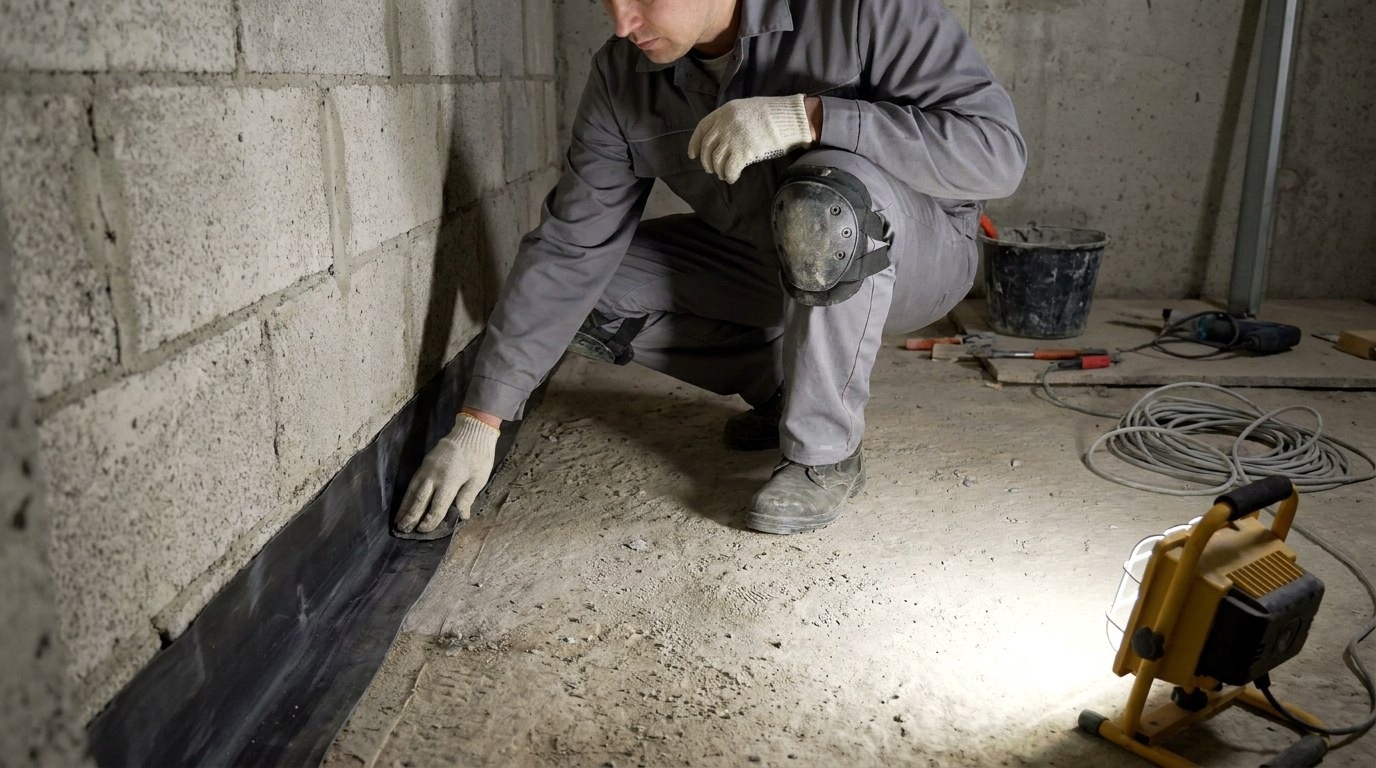
Bathroom waterproofing fails just as often, and mostly out of sight. European Technical's waterproofing guide cites Dubai Municipality building codes requiring a membrane at least 200mm up the wall and across the entire floor of a wet room. European Technical reports finding failed or inadequate waterproofing in roughly 40 percent of the bathrooms its technicians inspect.
Balconies and planter boxes fail at a different point, the junction where the membrane meets the drain outlet. Buildings across Dubai Marina, JBR, and Downtown carry this weakness from construction, an easy seam to cut corners on the first time round.
A cementitious coating inside a bathroom or water tank can reach ten to twenty years if it never sees direct sun, longer than most owners assume once the surface is tiled over.
What an inspection cannot tell you
An inspection has a real limit. Most bathroom waterproofing sits under the tiles, and a visual check from above cannot confirm what is happening beneath a finished floor.
Confirming the membrane there usually means opening the tiled surface, and that cost lands on the owner regardless of how early the problem was caught.
What a waterproofing inspection checks, start to finish
A waterproofing inspection in Dubai checks the same failure points every time: roof and terrace membranes for cracking or UV degradation, bathroom walls and floors for the 200mm membrane coverage Dubai Municipality requires, balcony and planter junctions where a membrane meets a drain outlet, and any concrete surface showing efflorescence or rust bleed. The inspector looks for damp patches that fade after rain, musty smells near exterior walls, bubbling paint below wet rooms, and lifting tiles on exposed terraces. None of these on their own confirm total failure. Together, they show whether a membrane is still doing its job or is quietly past it. What the inspection cannot do is see beneath a finished tiled floor without opening it, which is why European Technical treats visible signs as a trigger for a closer look rather than a final verdict.
Keeping waterproofing on a schedule instead of a memory
For villa owners juggling a roof, several bathrooms, balconies, and sometimes a basement, tracking every membrane by memory is unrealistic. Rolling waterproofing checks into a villa maintenance cover puts inspection dates on a calendar instead of memory.
Waterproofing inspection FAQ
How often should waterproofing be inspected in Dubai?
There is no single fixed interval that fits every property. What matters is checking against the working life of the membrane involved, roughly ten to fifteen years for a torch-on roof, five to ten for a liquid coating on a balcony, and sooner wherever damp patches, bubbling paint, or musty smells have already appeared.
Can a waterproofing inspection catch a hidden bathroom leak?
Only partly. An inspector can check visible signs like ceiling stains below a bathroom, bubbling paint, or a musty smell, but confirming a membrane failure under tiled flooring usually requires opening the surface. A visual inspection flags the problem; it does not always locate it without further work.
Does villa maintenance cover include waterproofing?
Villa maintenance cover from European Technical bundles waterproofing checks alongside AC, plumbing, electrical, and pool work under one contract, so inspection dates sit on the same schedule as everything else in the home rather than being tracked separately or forgotten.
What is the biggest waterproofing risk owners underestimate?
Balcony and planter box junctions, where the membrane meets the drain outlet. These seams are easy to build cheaply during construction and easy to overlook afterward, because the leak they eventually cause often shows up in a different room than the one where it started.